
Surgical Solutions Provider Website Design and Development
Woodbury, MN medical and surgical solution websites built around clear product navigation, structured content, and performance, helping clinicians and teams find information quickly and confidently.
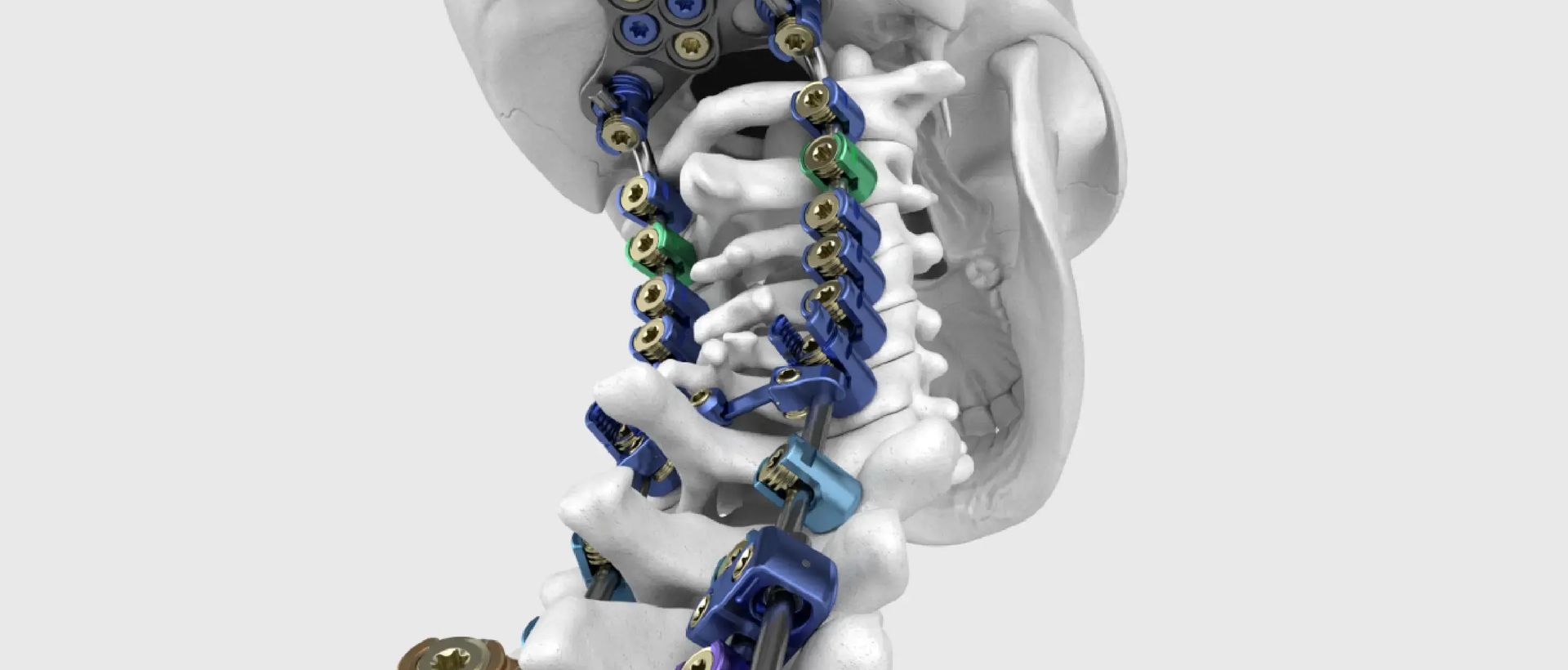
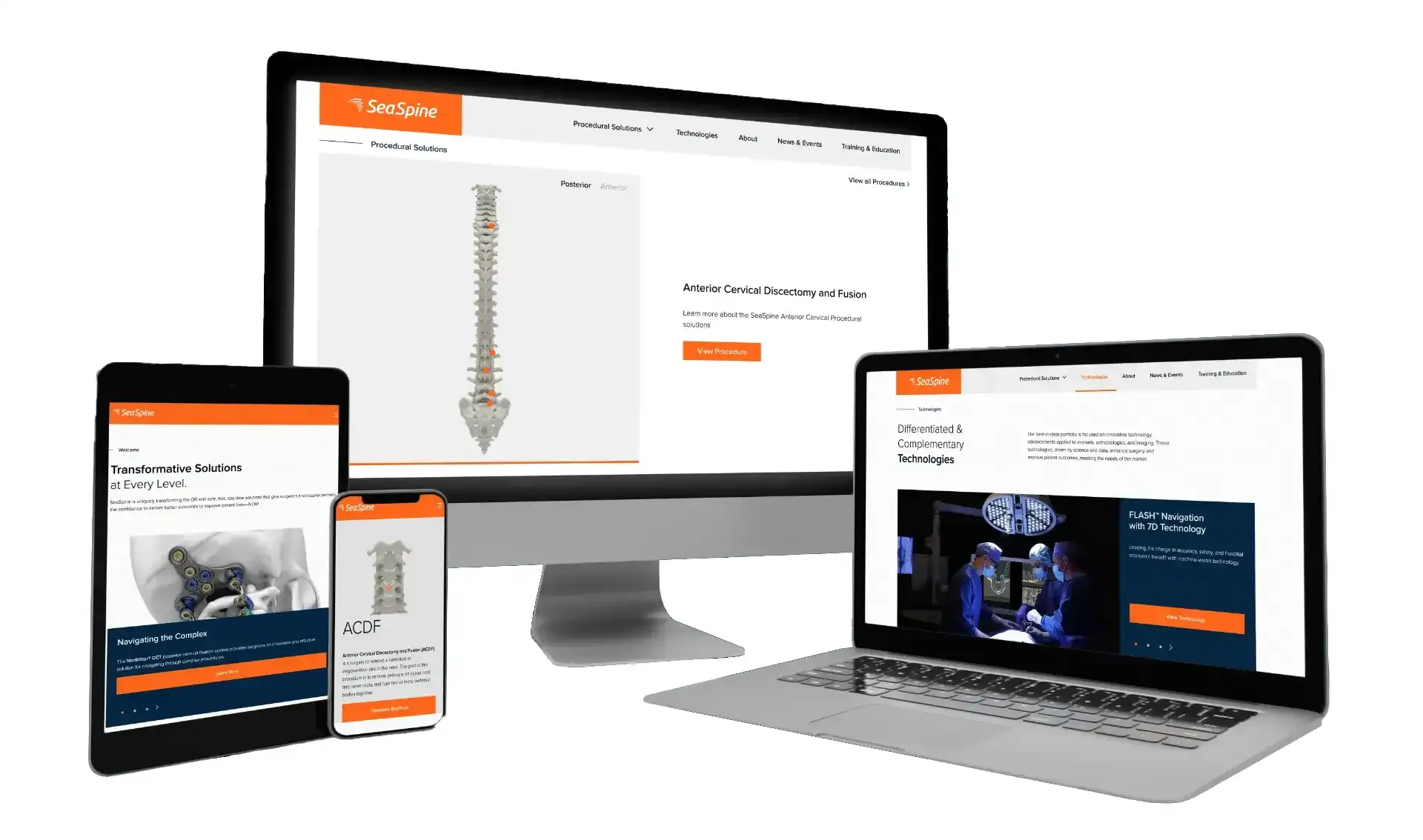
A modern spinal hardware website that is easier to maintain, faster to browse, and more engaging for surgeons, patients, and candidates
SeaSpine is a spinal surgical solutions provider focused on expanding its product ecosystem and supporting a full continuum of care. As the company grew, their website needed to evolve with it. The existing experience made it difficult to keep content current, scale new product lines, and deliver the kind of intuitive browsing that clinical audiences expect.
3200 Creative led a redesign and rebuild that modernized the brand experience, improved navigation, and introduced a flexible content system that empowered the team to publish updates quickly. The end result was a website built for performance, accessibility, and long term growth.
If you are a medical device brand, healthcare organization, or B2B company in Minnesota looking for a modern website and COS strategy, this project reflects the kind of work we deliver from our Woodbury, Minnesota studio, serving the Twin Cities including St. Paul and Minneapolis.
The Situation
SeaSpine had strong momentum and a growing portfolio. Their leadership team wanted a website that could keep up with product expansion while also improving the experience for multiple audiences:
- Surgeons and clinical teams researching products and procedures
- Patients and families seeking understandable information
- Prospective employees exploring the company and its mission
As content grew across product lines, procedures, and supporting resources, the site needed a more intentional information architecture. It also needed a modern COS that reduced friction for content editors and made future updates more predictable.
The mandate was clear:
- Make the site more intuitive and engaging for real users.
- Upgrade the technology stack to improve speed, accessibility, and maintainability.
- Create a COS foundation that supports growth without constant developer involvement.
Goals and Outcomes
Primary goals
- Improve navigation and content findability across product lines and procedures
- Upgrade the visual system so the brand feels like a modern industry leader
- Build a headless COS that is fast, flexible, and editor friendly
- Support interactive elements without trapping the content team in rigid templates
What success looked like
- A clearer structure that helps users find products by procedure and application
- Consistent page patterns that scale across new content
- A content model that matches how the organization thinks and publishes
- A frontend built for speed, accessibility, and future enhancements
What We Did
Core services delivered
- Information Architecture
- Content Modeling
- Website Design
- Sanity COS Development
- Gatsby JS Frontend Development
Supporting services that made the build smoother
- Wireframes and page layout planning
- Component system design for scalable page building
- Content entry workflows and editor experience improvements
- Performance focused implementation and QA
Discovery, Strategy, and Planning
Even when a project is heavily design and development focused, the best outcomes come from early clarity. We aligned with the SeaSpine team on audience needs, content goals, and how the product and procedure story should be told.
We approached discovery with a practical lens:
- What are users trying to accomplish in their first 30 seconds on a page?
- Which pages need to work hardest for product comprehension?
- Where should the content team have freedom, and where should guardrails exist?
This strategy phase informed both design decisions and the COS architecture so that the platform could scale without losing consistency.
Information Architecture
A fast growing company can end up with content that is technically “there” but hard to navigate. SeaSpine had multiple product lines and relationships between products, procedures, and supporting information. We needed a structure that served clinicians who browse quickly and patients who need clarity.
IA principles we used
- Start with user intent, not internal org charts
- Reduce clicks to core product answers
- Keep navigation consistent across sections
- Build repeatable page patterns that do not break as content expands
Key IA deliverables
- Updated site map and page hierarchy
- Page types for products, procedures, and supporting content
- Navigation patterns that scale across future categories
- Clear content relationships for cross linking and discovery
Example of scalable content relationships
- Products connect to procedures
- Procedures connect to product families
- Supporting content connects to both and provides context
This structure allowed SeaSpine to tell a cohesive story without duplicating content across dozens of pages.
Wireframes and UX Layout Planning
Wireframes were where complexity became simple.
To understand all product lines and intended interactions across each procedure, we planned page layouts with clarity and consistency in mind. Working closely with the SeaSpine team, we refined the content structure so pages were easy to navigate and easy to digest.
What the wireframing phase solved
- Clarified what content belongs on each page type
- Defined what should be consistent across the site
- Identified where interactive elements would provide real value
- Reduced the chance of redesign churn later in development
Wireframe outputs included
- Product page templates
- Procedure and application page templates
- Content heavy page layouts for educational material
- Navigation and cross link patterns that keep users oriented
Wireframes also became the blueprint for the COS component system, which made the build faster and more reliable.
Concepting and Website Design
After wireframes, we moved into concepting and design direction. The goal was to elevate the brand presence from a startup feel to a modern corporate healthcare leader, without losing approachability.
Design goals
- Create confidence and clarity through typography and layout
- Use visual hierarchy to support scanning
- Build a UI system that can scale as content expands
- Maintain an aesthetic appropriate for medical and surgical audiences
Design deliverables
- Multiple design directions and concept comps
- A reusable UI and component system
- Page level designs for key templates
- Responsive behavior planning for mobile and tablet users
In medical device web design, credibility matters. We prioritized clean structure, strong readability, and consistent patterns to help users trust the content and find what they need quickly.
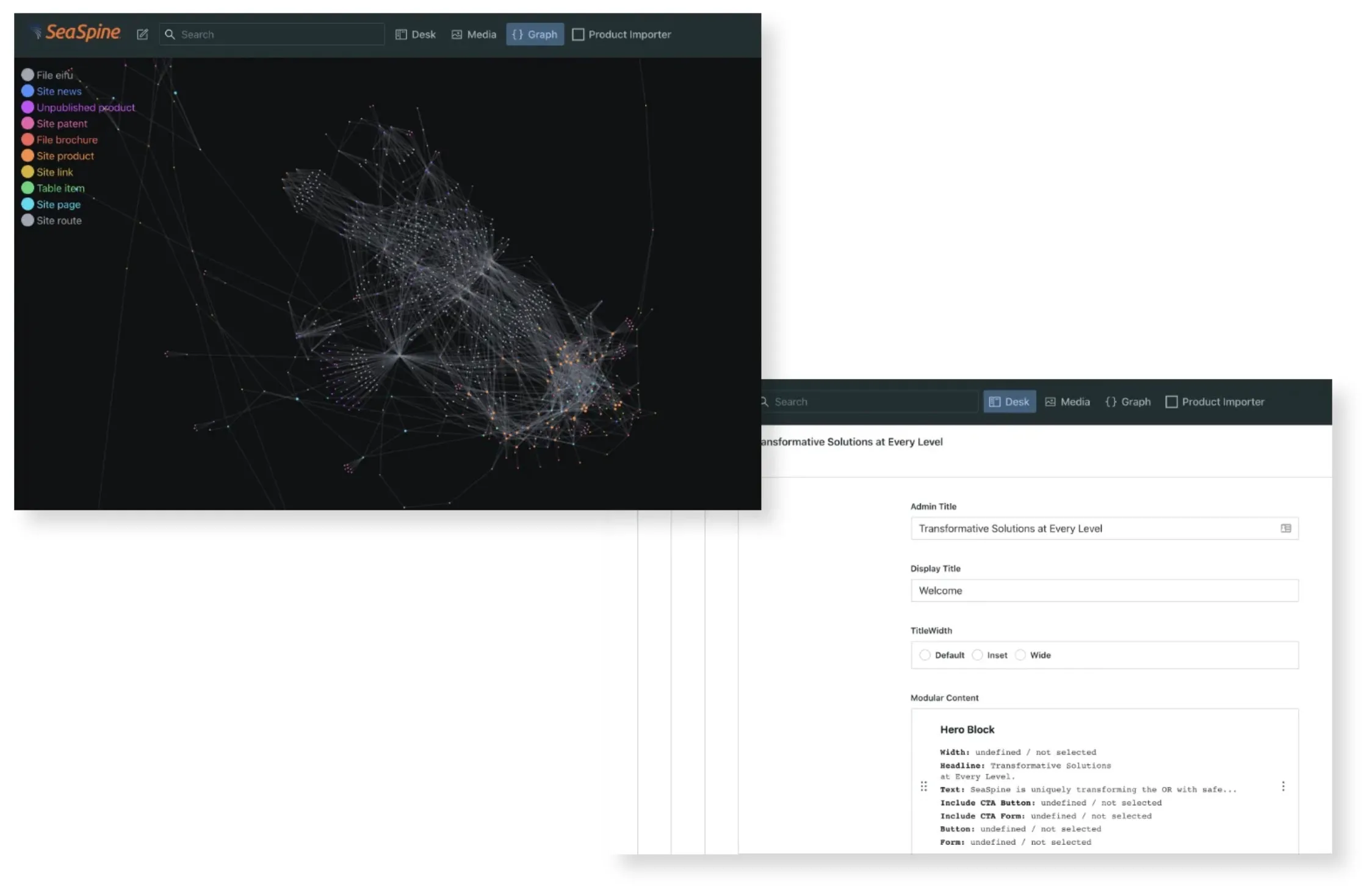
Sanity Headless Content Operating System Development
A major transformation in this project was moving away from a difficult-to-update and difficult-to-maintain website setup, and into a modern headless COS that supports rapid updates.
We chose Sanity because it excels at structured content, customizable editorial workflows, and flexible frontends. It also enables teams to publish content in ways that match how their business operates, rather than forcing everything into one rigid page builder.
Why a headless COS was the right fit
- Backend content management can evolve independently of the frontend
- Structured content supports reuse, relationships, and consistency
- Editors can manage complex content without developer bottlenecks
- The frontend can be optimized for speed and interaction
Content modeling and hierarchy
We developed a content model and hierarchy that structured the data in a way that mirrored SeaSpine’s product and procedure ecosystem. This included defining:
- Document types and fields for products, procedures, and supporting content
- Relationships that enable cross referencing and discovery
- Editorial constraints that reduce publishing errors
- Componentized content modules that can be reused across pages
Custom COS interfaces
Sanity becomes significantly more powerful when the editing experience is designed thoughtfully. We built custom interfaces that improved content editing and website updates so internal teams could confidently publish changes.
COS improvements included
- Clear field grouping and labeling
- Conditional fields where appropriate
- Editor friendly previews for confidence before publishing
- Structured inputs that reduce inconsistency across pages
This gave SeaSpine the ability to add content that remains consistent in style and structure while still providing flexibility.
Gatsby JS Frontend Development
With content management in place, the next step was delivering a fast, flexible frontend that could support interactive elements and a modern user experience.
We implemented a Gatsby JS frontend that:
- Loads quickly and feels responsive
- Supports modular content from the COS
- Enables interactive components that bring complex product content to life
- Maintains strong SEO fundamentals for discoverability
Why Gatsby for this project
- Strong performance foundations
- Great developer ergonomics for component systems
- Flexible integration with headless COS platforms like Sanity
- Predictable build and deploy workflows for stable releases
Interactive elements and modular content
A key objective was supporting interactive elements, such as a spinal image and related products, while keeping the system scalable. Instead of hard coding one off experiences, we built modular patterns that can be reused and expanded.
This approach makes it easier to add new product content without requiring rebuilds of page logic every time the catalog grows.
Our Implementation Process
A modern web build only stays “modern” if it is maintainable. Our process is designed to support long term value, not just a strong launch day.
Step by step workflow
- Align on user needs, content goals, and measurable outcomes
- Build a scalable information architecture and site map
- Wireframe key templates and page types
- Establish design direction and component system
- Build the COS content model and editorial workflows
- Implement the frontend and connect structured content
- QA for responsiveness, accessibility, and performance
- Prepare launch, documentation, and content team handoff
Quality checks we prioritize
- Responsive layout behavior across device sizes
- Page speed and performance optimization
- Accessibility checks for usability and compliance
- COS validation to reduce publishing errors
- Content migration planning where applicable
Results and Long Term Benefits
This website redesign and rebuild delivered more than a refreshed look. It created an operational foundation that makes future growth easier.
Improvements delivered
- A clearer and more intuitive website structure
- A design system that elevates brand credibility
- A modern editor experience in Sanity that supports rapid publishing
- A fast Gatsby frontend that supports interactive content and scalability
- A platform that is easier to maintain over time
Business value
- Reduced friction for internal teams updating the website
- Better organization of product and procedure content
- Stronger user experience for clinicians, patients, and applicants
- A stack that supports ongoing optimization, iteration, and growth
Technology Stack Summary
COS and content platform
- Sanity COS
- Structured content modeling
- Custom editorial interfaces
Frontend
- Gatsby JS
- Modular component system
- COS driven page composition
Design and UX
- Wireframes and template planning
- Scalable UI system design
- Responsive design strategy
How This Relates to Local SEO and Web Builds in Minnesota
While SeaSpine is a national brand, this project reflects the same approach we bring to businesses across Minnesota. 3200 Creative is based in Woodbury, and we build modern websites for organizations across the Twin Cities, including St. Paul and Minneapolis.
If you are looking for a local partner who can handle strategy, design, and development, this case study highlights several strengths that apply directly to Minnesota businesses:
- Clear information architecture that supports real user behavior
- Structured COS builds that reduce maintenance friction
- Modern web development for performance and SEO readiness
- Scalable component systems that support long term growth
Services You Can Expect From 3200 Creative
For medical, healthcare, and B2B websites
- Website strategy and information architecture
- Headless COS development and content modeling
- Custom website design and UX
- Frontend development with modern frameworks
- Performance optimization and technical SEO foundations
For organizations in the Twin Cities and beyond
- Website redesigns and replatforming
- COS migrations and structured content systems
- Ongoing support and iterative improvements
- Content operations support for scaling publishing workflows
Next Steps
If you are a company in Woodbury, the Twin Cities, or anywhere in Minnesota and you need a website that is modern, fast, and easy to maintain, we can help you build a platform that supports your next stage of growth.
A good fit for this approach
- Companies with complex offerings, product catalogs, or service lines
- Organizations that publish frequently and need editor friendly workflows
- Teams that want a modern UX without sacrificing SEO fundamentals
- Brands ready to move to a scalable COS and component based frontend
Typical engagement flow
- Discovery and planning
- IA and wireframes
- Design direction and component system
- COS development and content modeling
- Frontend implementation and QA
- Launch and ongoing support
Ready to get started?
We are ready to hear about your project!